
LONGNOSE SKATE - FISH SPECIES FEATURE
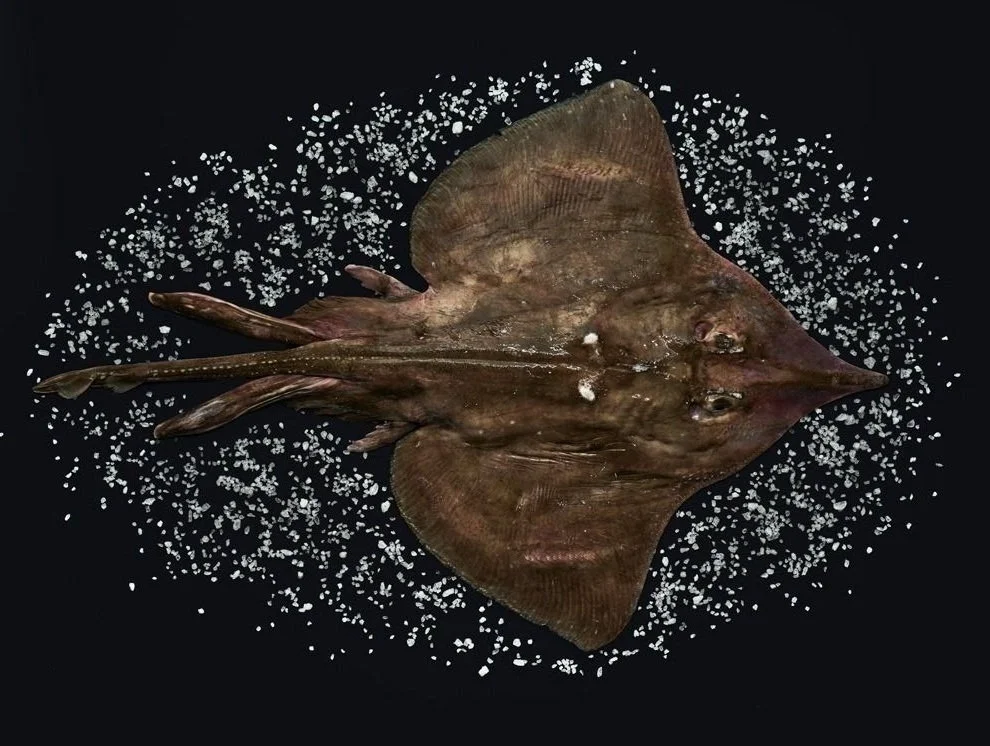
What is a Longnose Skate?
The Pacific Longnose Skate (Caliraja rhina) may not be a household name, but it’s a hidden gem in the world of seafood. It is caught locally on the West Coast. As with all West Coast Groundfish, Longnose Skate are managed responsibly and are certified sustainable by the Marine Stewardship Council.
Skate is exceptionally high in protein and low in fat. And just like its relatives the sharks and rays, skates have a cartilage-based skeleton instead of bones. This makes them naturally rich in collagen, an essential protein that supports healthy skin, joints, and overall tissue regeneration.
Culinarily, skate is incredibly versatile yet has some very unique features. Skate tastes mild, sweet and buttery, and is often compared to lobster or scallops. Its wing meat has high collagen content giving it a firm, slightly springy bite, whereas its serrated texture is perfect for holding breading or sauces. The classic preparation involves pan-frying or sautéing skate with brown butter and capers, allowing its natural sweetness to shine.

Longnose Skate Quick Facts


Longnose Skate Biology
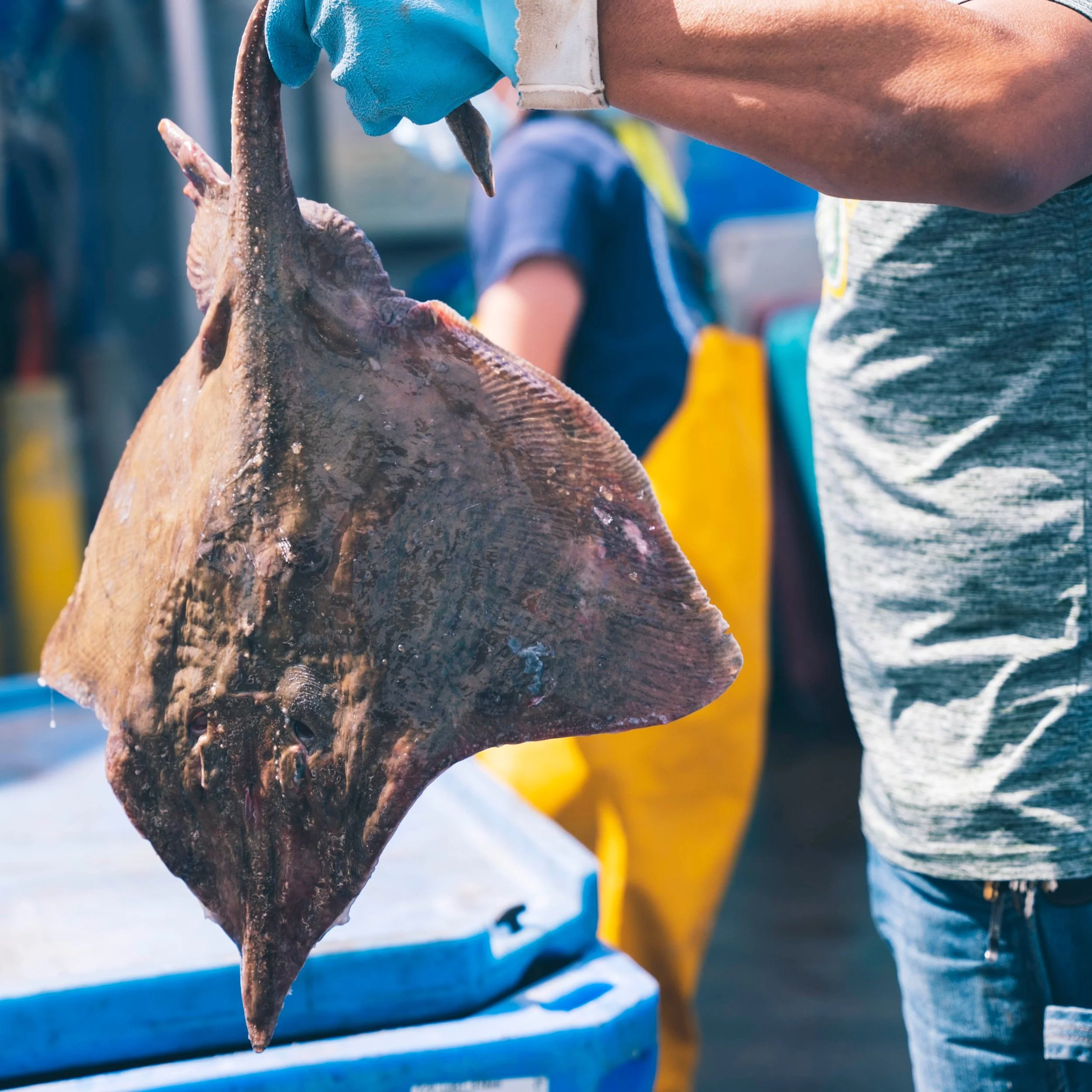
Like sharks, rays, and ratfishes, the Longnose Skate belongs to the Chondrichthyes class, a group of cartilaginous fish. This means they don’t have bones, but instead have strong cartilage. There are over 200 different species of skate, 11 of them on the West Coast, though we rarely see them differentiated by sub-species in markets or on menus. The longnose skate, as its name suggests, is recognized by its distinctive elongated snout. “Skate wings”, referring to its triangular pectoral fins, are the part we like to eat.
Longnose Skates’ home range is the continental shelf from Baja California all the way to Alaska, typically at depths of 100 - 2,000 feet. What a range! They live on sandy or silty sea floors, often buried up to their eyes, perfectly camouflaged, waiting patiently for prey, such as small fishes, invertebrates, mollusks and worms.
Skates are oviparous which means that their embryos develop externally inside a tough keratinized pouch. These shells, commonly known as “mermaid purses” when they wash ashore, have tendrils that attach to seaweed, rocks or the ocean floor to protect them from harsh waters and predators. They can grow to 4 or 5 feet, but are typically found at 2-3 feet in total length. Their life span is currently not fully understood, although individuals up to 13 years of age have been reported.
Longnose Skate Sustainability

Wild & Natural
Longnose Skate is a wild-caught fish species. This means it requires no arable land, no precious fresh water, nor any fertilizer, pesticides, polluting chemicals, or antibiotics to produce this excellent protein source.

Healthy and Abundant fish population
Longnose Skate belongs to the West Coast groundfish fishery which is among the most positive sustainability success stories around. This species enjoys healthy stock levels and is not subject to overfishing.

Well-managed fishery
Longnose Skate along with all other West Coast groundfish, are subject to a rigorous science-driven management process through the federally appointed Pacific Fishery Management Council that ensures continued abundance in the future. This entails scientifically set limits on total catch and limitations on when, where, and how fishing can occur (i.e., protecting sensitive habitats, and using gear that minimizes by-catch).

Keeping it local
While the average seafood product consumed in the United States clocks up over 5,000 food miles, Longnose Skate are caught and processed locally on the West Coast. Keeping it local not only minimizes food miles and their carbon footprint but also maximizes product freshness and quality.

100% monitored FISHERY
Skate fishermen are 100% accountable for their catch. All West Coast fishermen who catch a Longnose Skate with trawl have an independent observer and/or camera system on board on every single trip to ensure compliance and complete record-keeping.

Independently certified SUSTAINABLE
Since 2014, Longnose Skate caught in California, Oregon, or Washington has been certified sustainable by the Marine Stewardship Council, the gold standard for wild sustainable fish. Moreover, Longnose Skate is rated as a green "Best Choice" by Seafood Watch.

Longnose Skate Nutritional Content
The Pacific Longnose Skate has not yet been analyzed for its nutritional content, so we must make do with generic Skate nutrient data. That data, however, suggests that Skate is an absolute protein powerhouse. 100g of raw “skate wing”, the part of a skate that we eat, contains 10.5g of protein and only 0.3g of fat, for a total of only 45 calories. That’s a staggering 94% of calories from protein! To put that in perspective, that far surpasses chicken breast (80%), egg whites (82%), whey protein powder (65-80%) or steak (40-62%).
Moreover, Skate has incredibly high levels of Vitamin B12, a nutrient that is essential for red blood cell formation, nerve function and energy production. Calorie for calorie, skate has 8x more B12 than a T-bone steak! Skates are also a great source of natural collagen, owing to their cartilage structure. Adding a collagen-rich seafood like the Longnose Skate to your recipes can support skin hydration, joint mobility, and overall tissue repair. Not only can you reach your protein goals, but you can also support your skincare routine at the same time!
Learn more about how Skate compares to other foods here.


Longnose Skate Taste & Cooking
Taste: California Longnose Skate has a mild and buttery flavor, and are revered by those in the know. Their “wings” have a unique striated texture and taste similar to lobster or scallops – they are firm, a bit springy owning to their high collagen content, yet buttery and mild. While they are still a little known secret here in the United States, they are a valued staple in French or Latin American cuisines. Longnose Skate can be used as a substitute in monkfish recipes due to their shared lobster-like texture. It also works well in flounder recipes, as both fish yield thin fillets that cook similarly.
Preparation Methods: The tender texture of skate makes it ideal for pan-searing and poaching, allowing its delicate flavor to shine. With no traditional bones, it’s a great option for those who are scared of fish bones. Many recipes call for cooking the meat with the cartilage still attached, but once cooked, it separates easily. The wings’ ridges and concave shape help capture sauces and seasonings beautifully, enhancing flavor and bite.
How to cook Skate
How to fillet a Skate

Common Questions
-
The Pacific Longnose Skate is a locally caught seafood hidden gem sustainably managed off the West Coast by the Groundfish Fishery. Its wing meat is prized for its mildly sweet and firm-yet-tender texture, often compared to scallops or lobster. Versatile in the kitchen, it can be pan-fried, poached, grilled, or even used in ceviche. With a cartilage-based skeleton, skate is naturally rich in collagen, making it both a nutritious and delicious choice.
-
Skate is most likely to be found at local fishmarkets and community driven online sellers. We have provided a list of markets, online suppliers, and restaurants that focus on these local sustainable species. Give them a call to check on Skate stock! Check out our Retail & Restaurant Guide>>
-
Longnose Skate is a sustainable seafood choice owing to well-managed fisheries and practices that help maintain healthy population levels, ensuring its availability for future generations. Pacific Longnose Skate caught on the West Coast of the US is certified sustainable by the Marine Stewardship Council (MSC). Get more detail on what exactly makes this species such a sustainable choice in our Sustainability Guide>>>
-
Longnose Skate is a delicious and easy-to-cook seafood choice, that is revered by anyone in the know. Unlike most fish, Skate has no small bones, but instead is made up of cartilage. Its cartilage easily separates once cooked, making it an easy to prepare seafood. It is sustainably managed and caught - and with all of it coming from the West Coast, it is a wonderful local fish. Skate is a unique fish that has a taste and texture similar to scallop or lobster. Longnose skate is sure to impress your friends and family with even a simple recipe.
-
Although the Longnose Skate is related to rays and sharks, it is a non-aggressive fish. It does have spines along its tail that are used for self-defense, but they are non-venomous unlike their stingray relatives. They pose no threat to humans, but should still be handled with care - just as any other fish, their ‘bones’ can still poke!
-
Skate has a mild, slightly sweet flavor reminiscent of lobster or scallops, making it a fantastic seafood alternative. A staple in French and Latin American cuisine, Skate’s firm yet tender texture works well in a variety of classic dishes. If you're looking for a sustainable seafood option, Skate can easily replace lobster or scallops in many recipes, from buttery pan-seared preparations to rich seafood stews.
-
Pacific Longnose Skate, Caliraja rhina or raja rhina, is a sub-species of skate. It is most closely related to Big Skate which has a slightly pointed nose, but not as protruding as the long nose. Other species off the West Coast include the Alaska Skate, Deepsea Skate, Aleutian Skate, Sandpaper Skate, Whiteblotched Skate, Roughtail Skate and the California Skate. The Pacific Longnose Skate fishery is well established and ensures a sustainable approach to enjoying this tasty fish!
-
If you are buying anywhere near the West Coast it is most likely going to be a Pacific Longnose, because it’s the largest fishery and most frequently caught. All Skate will have similarities in taste and cooking qualities, but we recommend asking your local fisherman, market, or grocery store for species details, to ensure you are confident in your recipe!